
When a Starter Goes Down: How FantasyOmatic Redistributes the Opportunity
An injury takes one player to zero and hands his volume to someone else. Here's how the vacancy system detects the absence, finds who inherits the work, sizes the boost, and prices it as the rental it is — and why opponent injuries are a different story.
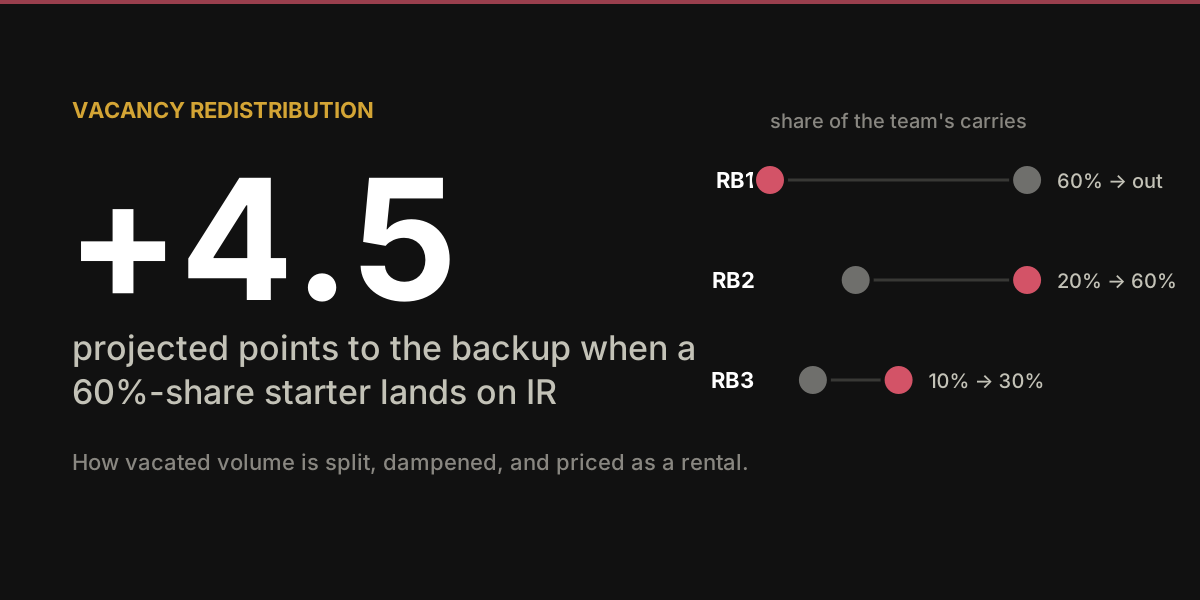
Every injury creates two questions. The first is obvious — what happens to the injured player's number? That one is simple: an Out or IR designation takes his weekly projection to zero, Doubtful takes it most of the way there, Questionable trims it. The second question is the one that wins waiver weeks: where does his production go?
That is what the vacancy system answers. Here is exactly how it works, where you'll see it, and what it deliberately does not do.
Step 1 — Detect the vacancy
A vacancy opens only on high-certainty absences: Injured Reserve, PUP, NFI, suspension, or an Out designation — plus the injury estimator's high-confidence projected absences for players it expects to miss multiple weeks. A Questionable tag does not open a vacancy. We would rather miss a week of a genuine absence than hand out phantom boosts every Wednesday.
Step 2 — Find who inherits it
Opportunity doesn't vanish when a starter sits; it flows to the teammates who already have a role. We identify them from the depth chart and their existing share of the offense:
- Running backs with at least 15% of the team's carries
- Wide receivers with at least 10% of the team's targets
- Tight ends with at least 8% of the team's targets
- Quarterbacks: the depth-chart backup, whoever he is
A fourth-string back with two carries all year doesn't qualify. The committee partner who already gets a third of the touches does.
Step 3 — Size the boost
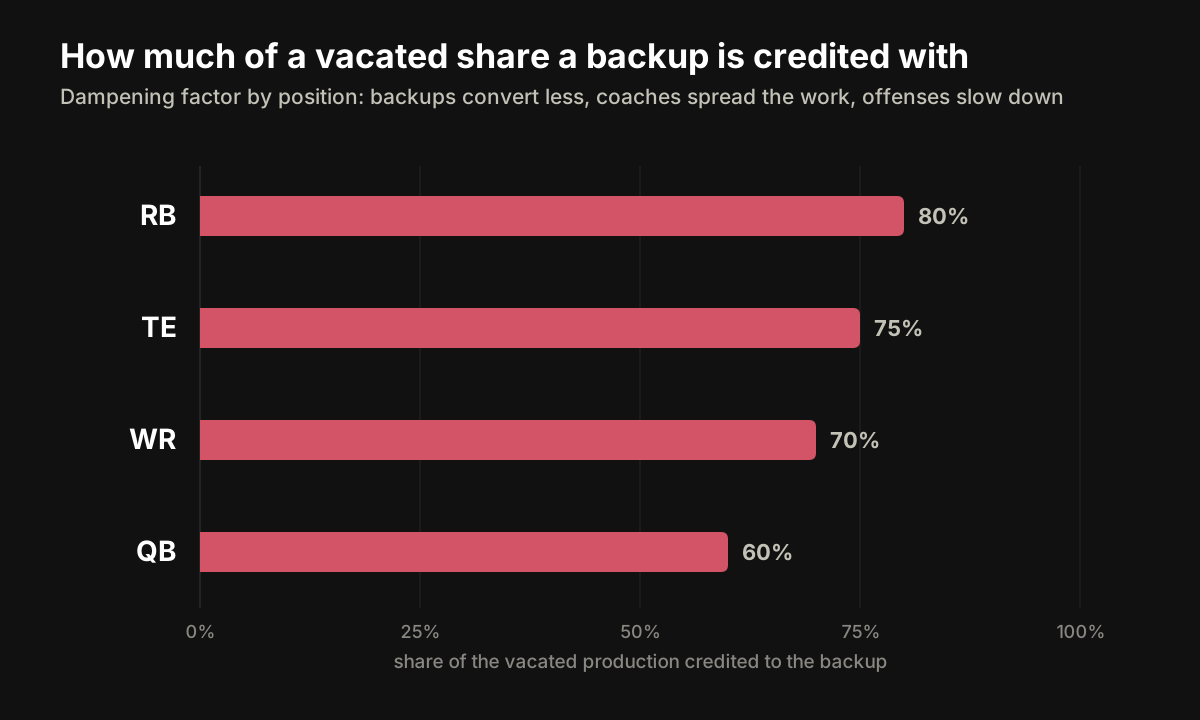
The injured starter's share is split among the qualifying backups in proportion to the shares they already own, and each backup's boost is that redistributed share of the starter's projected points, scaled down by a position-specific dampening factor:
| Position | Dampening | Why |
|---|---|---|
| RB | 0.80 | Rushing volume transfers most directly; the scheme barely changes |
| TE | 0.75 | Fewer mouths competing for the freed targets |
| WR | 0.70 | Target redistribution is the least predictable; coverage shifts too |
| QB | 0.60 | Backup quarterbacks are much less productive and the whole offense regresses |
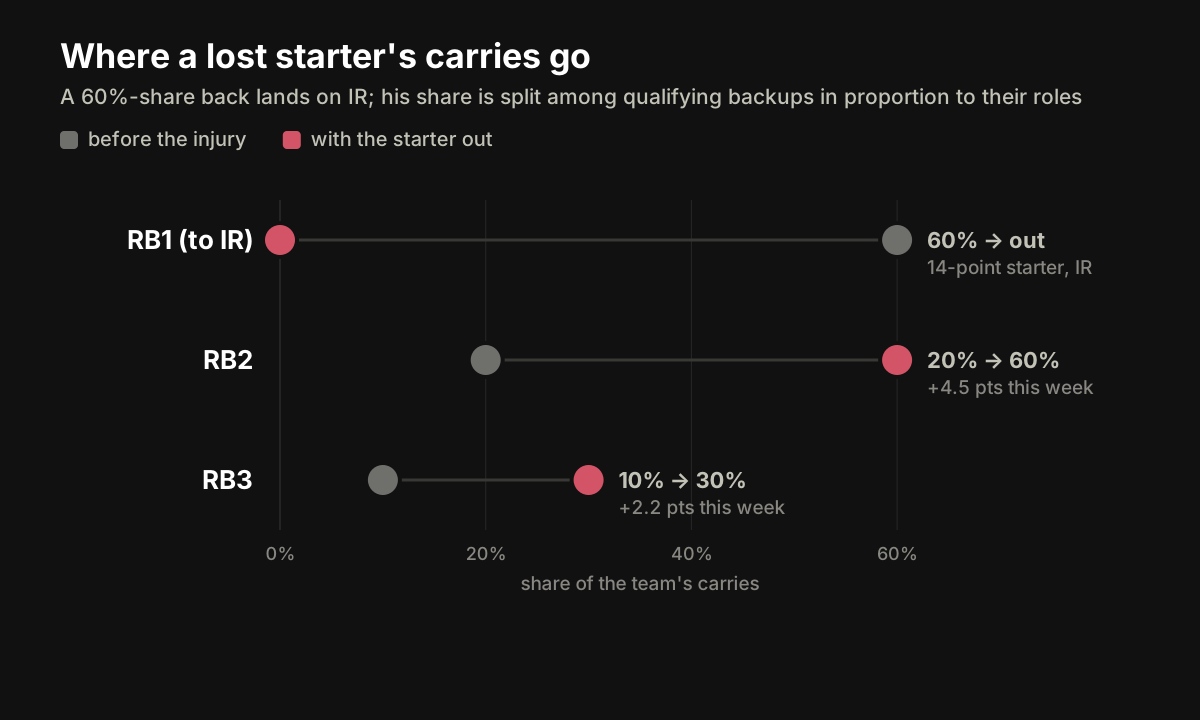
A worked example. A lead back with 60% of the carries and a 14-point projection lands on IR. His two committee mates own 20% and 10% of the carries. The 60% is split two-to-one:
- RB2 inherits 40% of the team's carries on top of his 20% → boost = 14 × 0.40 × 0.80 = +4.5 points
- RB3 inherits 20% → boost = 14 × 0.20 × 0.80 = +2.2 points
RB2 just became a legitimate flex. RB3 became a handcuff worth a bench spot. The system says so before the beat writers do.
Step 4 — Only for as long as he's out
The boost is duration-aware. It applies to the weeks the starter is unavailable — through his earliest legal return from IR, or the estimator's projected return — and reverts the week he is back. That means the rest-of-season rating and the trade index automatically treat the backup as what he is: a rental, priced for the length of the rental.
Where you'll see it
- This Week and rest-of-season projections — the boost is baked into the number, not shown as a separate line item you have to add yourself.
- Smart Alerts on your dashboard — the Vacancy Targets alert surfaces backups who just inherited volume and are available in your league.
- The AI Coach — every boosted player carries a tag like "+4.5 pts from vacancy (Henry, IR, 60% share)", so you can ask it why a number moved and get the source.
- The Podcast — the hosts flag vacancies matter-of-factly, with the return timeline attached.
The boost moves this week's projection and the future weeks the starter is out for. The neutral Player Rating and the defensive matchup numbers are deliberately left alone. A two-minute explainer on how the ratings get made covers what each of those numbers is for.
What it deliberately does not do
It doesn't make a backup more efficient. A 3.8-yards-per-carry runner getting 20 more carries is still a 3.8-yards-per-carry runner. The boost is volume; the conversion is his.
It doesn't touch the other side of the ball. Injuries to the opponent's defense are a different question, and we tested it this month across thirteen seasons of injury reports and defensive snap counts. The direction is real — a quarterback facing a front seven missing a starter scores about a point more than the opponent's season rating implies — but the opponent rating already absorbs most of it, and adding the leftover as a feature made weekly accuracy worse. So opponent injuries are context the AI Coach can talk about, not a number in the rating. Teammate injuries feed the vacancy system; opponent injuries feed nothing.
It doesn't chase Questionable tags. If the designation could go either way, the projection is trimmed by the injury factor and the backups stay where they are.
How to use it
- Watch the designation, not the rumor. The vacancy opens the moment the IR or Out designation lands. That's your waiver window.
- Price the rental by the return date. An IR stint with a Week 12 earliest return is a four-week asset. The trade index already knows that; use it.
- Prefer the committee partner over the unknown. The system only boosts players who already had a role. If nobody on the depth chart qualifies, the honest answer is "this production is gone," and the system says so by boosting no one.
- Check the handcuff's efficiency, not just his boost. Two backups can inherit the same volume and convert it very differently.
Depth charts lag, coaches surprise everyone, and the dampening factors are a prior, not a prophecy. But when the starter goes down, you'll know who inherits the work, how much, and for how long — before the waiver wire figures it out.
Don't share this with anyone in your league.
Share with the people you want to see win.
Discussion
No comments yet. Be the first to share your take.